SPATIAL ACCESSIBILITY TO RURAL MARKET CENTRES AND HOUSEHOLD FOOD SECURITY IN SOUTHERN CROSS RIVER STATE, NIGERIA 87 28
DOI:
https://doi.org/10.83374/jesber.vol1no2.111Keywords:
spatial accessibility, rural market centres, household food security, dietary diversity, food access, Southern Cross River StateAbstract
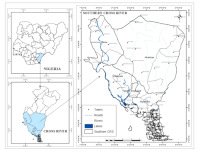
Spatial accessibility to food markets significantly impacts rural food systems, influencing households' access to sufficient and diverse foods. This study investigates the relationship between spatial accessibility to rural market centers and household food security in Southern Cross River State, Nigeria, comparing food-security outcomes across accessibility levels and assessing implications for food-access planning in Southern Cross River State. A cross-sectional survey was conducted from June to August 2024 involving 420 households from 25 rural communities. Data on proximity to market centers, Months of Adequate Household Food Provisioning (MAHFP), dietary diversity, and food expenditure were collected. Households were categorized by distance to the nearest market (10 km or more). Descriptive and comparative analyses assessed food-security outcomes across these categories. Pearson's chi-square test was used to assessed the relationship between household proximity to market centers and three food-security indicators. The findings indicated spatial differences in access to rural market centers. Households within 10 km exhibited better outcomes in food provisioning, dietary diversity, and food expenditure compared to those beyond 10 km. Additionally, there was an association between spatial accessibility and food-security outcomes, though the cross-sectional design limits causal inferences. The study emphasizes the need to integrate spatial accessibility into rural food-security planning. Enhancing connectivity, strengthening market infrastructure, and supporting agricultural livelihoods can reduce geographical barriers to food access in Southern Cross River State.Downloads
References
Akpabio, E. M., & Umoh, G. S. (2021). The practical challenges of achieving sustainable wetland agriculture in Nigeria’s Cross River Basin. Water International, 46(1), 83–97. https://doi.org/10.1080/02508060.2020.1863698
Bassey, B. J., Ochiche, C. Abua, Eni, D. Imoke, Egbai, O. O., Ajom, S. K., Robert, E. A., Ojobe, S. U., Abua, M. A. & Uquetan, I. Uquetan (2023). Analysing the impact of rural markets on socio-economic development of Cross River North Senatorial District, Nigeria. World Environment Journal. 3 (1).
Bassey, S. I., Eteng, S., & Ewah, E. F. (2022). Assessment of rural transportation in Abi Local Government Area, Cross River State, Nigeria. Global Sustainability Research, 1(2), 30–41. https://doi.org/10.56556/gssr.v1i2.367
Benassai-Dalmau, R., Voukelatou, V., Schifanella, R., Fiandrino, S., Paolotti, D., & Kalimeri, K. (2026). Continental-scale assessment of spatial food market accessibility in Africa using open geospatial data. Scientific Reports. https://doi.org/10.1038/s41598-026- 59806-y
Campomanes, F., Marshall, M., & Nelson, A. (2024). A method for estimating physical and economic food access at high spatial resolution. Food Security, 16(1), 47–64. https://doi.org/10.1007/s12571-023-01404-1
Ilori, A. O., & Anusa, A. A. (2020). Geotechnical characterization of the subgrade on some rural roads in Cross River State, Nigeria and the influence of geology. Journal of Engineering Research and Reports, 10(3), 27–39. https://doi.org/10.9734/JERR/2020/v10i317041
Kalio, G. A., Agunwobi, L. N., Ayuk, A. A., & Eneji, C. A. (2020). Availability and estimation of crop by-product yields for small ruminant production in Cross River State, Nigeria. Nigerian Journal of Animal Production, 40(1), 117–122. https://doi.org/10.51791/njap.v40i1.669
Mekonnen, D. A., Trijsburg, L., Achterbosch, T., Brouwer, I. D., Kennedy, G., Linderhof, V., Ruben, R., & Talsma, E. F. (2021). Food consumption patterns, nutrient adequacy, and the food systems in Nigeria. Agricultural and Food Economics, 9, Article 16. https://doi.org/10.1186/s40100-021-00188-2
Milner, D., Wolf, L., Wijk, M. V., & Hammond, J. (2022). Market access and dietary diversity: A spatially explicit multi-level analysis in Southern and Western Kenya. Frontiers in Sustainable Food Systems, 6, Article 740485. https://doi.org/10.3389/fsufs.2022.740485
National Agricultural Extension and Research Liaison Services [NAERLS], & Federal Ministry of Agriculture and Rural Development [FMARD]. (2022). Agricultural performance survey of the 2021 wet season in Nigeria.
Nandi, R., Nedumaran, S., & Ravula, P. (2021). The interplay between food market access and farm household dietary diversity in low- and middle-income countries: A systematic review of literature. Global Food Security, 28, Article 100484. https://doi.org/10.1016/j.gfs.2020.100484
Nkegbe, P. K., & Mumin, Y. A. (2022). Impact of community development initiatives and access to community markets on household food security and nutrition in Ghana. Food Policy, 113, 102282. https://doi.org/10.1016/j.foodpol.2022.102282
Nguyen, T.-T., & Qaim, M. (2025). Local and regional food production diversity are positively associated with household dietary diversity in rural Africa. Nature Food, 6(2), 205– 212. https://doi.org/10.1038/s43016-024-01096-6
Ochiche, C. A., Okpiliya, F. I., Eni, D. D., Ajake, A. O. and Ajom, S. K. (2021). Analysis of Spatial and Temporal Distribution of Periodic Markets in Cross River North Senatorial District, Nigeria. Journal of Critical Reviews. 8 (2). 1931-1954.
Ochiche, C. A., Ugbong. P. U. and Niyi, D. Y. (2026). Nigerian Urban Marketplaces and Climate Adaptation: A Review. World Environment Journal. 6 (1), 71-81.
Ochiche, C. A., Uquetan, I. U., Omeje, V. U., Okpara, D. E. and Mbora, J. E. (2023). Analysis of the Factors Influencing Market Patronage in Calabar Metropolis, Cross River State, Nigeria. World Environment Journal. 3 (2).
Usman, M. A., & Haile, M. G. (2022). Market access, household dietary diversity and food security: Evidence from Eastern Africa. Food Policy, 113, Article 102374. https://doi.org/10.1016/j.foodpol.2022.102374
Downloads
Published
Issue
Section
License
Copyright (c) 2026 Journal of Enviromental Sciences and Built Environental Research

This work is licensed under a Creative Commons Attribution-NonCommercial-ShareAlike 4.0 International License.
All articles are published under Creative Commons Attribution 4.0 International License (CC BY 4.0). Users may share, adapt, and distribute the work provided appropriate credit is given to the authors and JESBER.