PHYTOGEOGRAPHIC CHARACTERISTICS ALONG CATENA SEGMENTS IN ITU LOCAL GOVERNMENT AREA, AKWA IBOM STATE, SOUTH-SOUTHERN NIGERIA 0 0
DOI:
https://doi.org/10.83374/jesber.vol1no2.90Keywords:
Phytogeographic characteristics, Catena segments, Species diversity, Slope position, Vegetation-soil relationship, Itu Local Government Area, Akwa Ibom State (Nigeria)Abstract
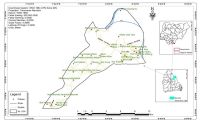
Slope-induced variation in soil properties is widely recognised as a determinant of plant distribution, yet how this variation shapes woody and herbaceous species composition in the secondary forests of south-southern Nigeria remains poorly documented, leaving land managers without a local basis for conservation planning along catena landscapes. This study examined the phytogeographic characteristics of plant species along catena (slope) segments in Itu Local Government Area, Akwa Ibom State, Nigeria, with the objective of determining species composition, diversity, and whether density varies significantly across the upper, middle, and lower slope segments. An experimental design was adopted across the Ebu Afaha, Mbak, Afaha Ikot Udoe, and Oku Iboku communities: four toposequences were delineated with the aid of ArcGIS and a Geographic Positioning System, each divided into upper, middle, and lower slope segments, and a 20 m × 20 m quadrat (subdivided into 10 m × 10 m sub-plots) was established per segment, giving twelve quadrats in total; species data were analysed with descriptive statistics, the Shannon-Wiener diversity index, and one-way analysis of variance (ANOVA). Eighty-nine species (52 tree/shrub and 37 herbaceous) belonging to 59 families were recorded, with high overall diversity (H = 3.9) but low species evenness (0.03); tree/shrub density did not differ significantly along the catena as a whole (F = 2.581, p = 0.079), although the middle slope was significantly more diverse than the upper slope (p = 0.030). These results imply that catena position exerts a measurable, if spatially uneven, influence on woody species distribution in the study area, and that anthropogenic pressure rather than topography alone now drives much of the observed vegetation pattern. The study contributes new baseline phytogeographic data for the Itu catena and recommends erosion-control measures on the upper slope and stricter control of fuel-wood harvesting and illegal logging to conserve this species-rich ecosystem.Downloads
References
Aweto, A. O. (1976). Changes in soil characteristics associated with secondary succession in a part of the forest zone of south-western Nigeria. Postgraduate Students/Staff Seminar, Department of Geography, University of Ibadan.
Aweto, A. O., & Iyamah, C. C. (1993). Catenary variation of vegetation in a swamp forest in south-western Nigeria. International Journal of Environmental Studies, 43(2-3), 133–140.
Begum, F., Bajracharya, R. M., Sharma, S., & Sitaula, B. K. (2010). Influence of slope aspect on soil physicochemical and biological properties in the mid hills of central Nepal. International Journal of Sustainable Development World, 17, 438–443.
Brant, V., Pivec, J., Venclová, V., Soukup, J., & Holec, J. (2006). The influence of different soil vegetation covers on the volumetric water content in upper soil layers. Plant, Soil and Environment, 52(6), 275–281.
Eneyo, V. B. (2026a). Tourism development systems and planning models. In Sustainable tourism and environmental systems (pp. 213–227).
Eneyo, V. (2026b). Environmental management and impact assessment in tourism. In Sustainable tourism and environmental systems (pp. 228–248).
Eni, D. D., Iwara, A. I., & Offiong, R. A. (2011). Analysis of soil-vegetation interrelationships in a south-southern secondary forest of Nigeria. International Journal of Forestry Research, 3(2), 128–147. https://doi.org/10.1155/2012/469326
Essoka, A., & Jaiyeoba, A. (2008). A study of soils formed along a toposequence granitic-gneiss material in a rainforest region of Cross River State-southeastern Nigeria. University of Calabar.
Fasona, M. J., & Omojola, A. S. (2005). Climate change, human security, and communal clashes in Nigeria. Human Security and Climate Change, An International Workshop, Asker, Norway (Unpublished conference paper).
Idoga, S., & Azagaku, D. E. (2005). Characterization and classification of soils of Janta area, Plateau State of Nigeria. Nigeria Journal of Soil Science, 15, 116–122.
Jamieson, T., Gordon, R., Cochrane, L., & Patterson, G. (2004). Fundamental aspects of soil-water-plant relationships (Technical Report). Resource Stewardship Division, Nova Scotia Department of Agriculture and Fisheries, Truro, Nova Scotia.
Jenny, H. (1941). Factors of soil formation: A system of quantitative pedology. McGraw Hill.
Khormali, F., Ayoubi, S., Foomani, F. K., Fatemi, A., & Hemmati, K. A. (2007). Tea yield and soil properties as affected by slope position and aspect in Lahijan area, Iran. International Journal of Plant Production, 1, 245–259.
Moorman, T. B., Cambardella, C. A., James, D. E., Karlen, D. L., & Kramer, L. A. (2004). Quantification of tillage and landscape effects on soil carbon in small Iowa watersheds. Soil and Tillage Research, 78, 225–236.
Pickering, C. M., & Green, K. (2009). Vascular plant distribution in relation to topography, soils, and micro-climate at five Gloria sites in the Snowy Mountains, Australia. Australian Journal of Botany, 57(3), 189–199.
Rodrigues, R. S., Jhonathan-de, O. S., Walnir, G. F., Rubens, M. S., & Andreza, V. N. (2018). The influence of soil on vegetation structure and plant diversity in different tropical savanna and forest habitats in Brazil. Journal of Plant Ecology, 2(3), 115–137.
Rodriguez-Iturbe, I. (2000). Ecohydrology: A hydrologic perspective of climate-soil vegetation dynamics. Water Resources Research, 36(1), 3–9.
Runhong, L., Yuanfang, P., Han, B., Shichu, L., Yong, J., Hongrun, J. N., & Wanqing, H. (2020). Variations in soil physicochemical properties along slope position gradient in secondary vegetation of the hilly region, Guilin, southwest China. Environmental Earth Sciences, 79, 1–12.
Tsui, C. C., Chen, Z. S., & Hsieh, C. F. (2004). Relationships between soil properties and slope position in a lowland rain forest of southern Taiwan. Geoderma, 123, 131–142.
Tunçay, T., Dengiz, O., Bayramin, I., Kilic, S., & Baskan, O. (2019). Assessing topographic wetness index as a tool for digital soil mapping. Eurasian Journal of Soil Science, 8(1), 40–49.
Van der Maarel, E. (2004). Vegetation ecology. Blackwell.
Zhang, X. Y., Liu, M. Z., Zhao, X., Li, Y. Q., Zhao, W., Li, A., Chen, S., Chen, S. P., Han, X. G., & Huang, J. H. (2018). Topography and grazing effects on storage of soil organic carbon and nitrogen in the northern China grasslands. Ecological Indicators, 93, 45–53.
Downloads
Published
Issue
Section
License
Copyright (c) 2026 Journal of Enviromental Sciences and Built Environental Research

This work is licensed under a Creative Commons Attribution-NonCommercial-ShareAlike 4.0 International License.
All articles are published under Creative Commons Attribution 4.0 International License (CC BY 4.0). Users may share, adapt, and distribute the work provided appropriate credit is given to the authors and JESBER.