PASSIVE COOLING STRATEGIES IN INSTITUTIONAL BUILDINGS: A SYSTEMATIC REVIEW OF THERMAL COMFORT PERFORMANCE AND ENERGY REDUCTION POTENTIAL 60 25
DOI:
https://doi.org/10.83374/jesber.vol1no2.110Keywords:
passive cooling, institutional buildings, thermal comfort, energy efficiency, natural ventilation, solar shading, adaptive comfort, systematic reviewAbstract
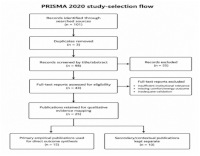
Institutional buildings such as schools, universities and public facilities often depend on mechanical cooling despite constrained energy budgets. This review examined how passive cooling strategies can reduce cooling demand while maintaining acceptable indoor conditions. Searches conducted between April and May 2026 used ScienceDirect, Wiley Online Library, SpringerLink, Taylor & Francis Online and Google Scholar, supplemented by backward and forward citation tracking. Twenty-five publications were retained for qualitative evidence mapping. Because the corpus contained both primary empirical studies and secondary reviews or conceptual sources, the revised synthesis separates these evidence types: primary empirical studies inform direct outcome synthesis, while secondary sources provide taxonomy, context and interpretation. The clearest directly traceable energy result in the primary institutional evidence was an 18–33% annual primary-energy saving from natural ventilation in Spanish school buildings. Adaptive-comfort evidence also indicates that occupants of naturally ventilated educational buildings may accept conditions around 1–2°C beyond static-model expectations, although the magnitude varies by climate, method and building operation. The literature remains geographically uneven and methodologically heterogeneous, with limited long-term field monitoring and lifecycle-cost evidence. These limitations mean that passive strategies should be interpreted as climate- and context-dependent rather than as universal effect sizes.Downloads
References
Ameen, A., Rashid, F. L., Al-Obaidi, M. A., Al Maimuri, N. M. L., Abdalrahem, M. K., Agyekum, E. B., Chibani, A., & Kezzar, M. (2026). Ventilation strategies in net-zero energy buildings: Balancing indoor air quality and energy efficiency. Energy and Buildings, 351, 116724. https://doi.org/10.1016/j.enbuild.2025.116724
Amer, O., Boukhanouf, R., & Ibrahim, H. G. (2015). A review of evaporative cooling technologies. International Journal of Environmental Science and Development, 6(2), 111–117. https://doi.org/10.7763/IJESD.2015.V6.571
Anuja, N., & Amutha Priya, N. (2019). A study on the utilization of natural ventilation systems in institutional buildings. Shanlax International Journal of Management, 7(1), 73–81. https://doi.org/10.34293/management.v7i1.513
Chow, S. K. H., Li, D. H. W., Lee, E. W. M., & Lam, J. C. (2013). Analysis and prediction of daylighting and energy performance in atrium spaces using daylight-linked lighting controls. Applied Energy, 112, 1016–1024. https://doi.org/10.1016/j.apenergy.2012.12.033
de Dear, R., & Brager, G. S. (1998). Developing an adaptive model of thermal comfort and preference. ASHRAE Transactions, 104(1), 145–167.
de Dear, R., Kim, J., Candido, C., & Deuble, M. (2015). Adaptive thermal comfort in Australian school classrooms. Building Research & Information, 43(3), 383–398. https://doi.org/10.1080/09613218.2015.991627
de Gracia, A., & Cabeza, L. F. (2015). Phase change materials and thermal energy storage for buildings. Energy and Buildings, 103, 414–419. https://doi.org/10.1016/j.enbuild.2015.06.007
Gil-Baez, M., Barrios-Padura, Á., Molina-Huelva, M., & Chacartegui, R. (2017). Natural ventilation systems in 21st-century for near zero energy school buildings. Energy, 137, 1186–1200. https://doi.org/10.1016/j.energy.2017.05.188
Heracleous, C., & Michael, A. (2019). Impact of natural ventilation on indoor air quality and thermal comfort conditions of educational buildings in the Eastern Mediterranean region. Journal of Building Engineering, 26, 100917.
Hu, M., Zhang, K., Nguyen, Q., & Tasdizen, T. (2023). The effects of passive design on indoor thermal comfort and energy savings for residential buildings in hot climates: A systematic review. Energy and Buildings, 279, 112687.
Huang, K.-T., & Hwang, R.-L. (2016). Parametric study on energy and thermal performance of school buildings with natural ventilation, hybrid ventilation and air conditioning. Indoor and Built Environment, 25(7), 1148–1162. https://doi.org/10.1177/1420326X15609773
Hwang, R.-L., Lin, T.-P., Chen, C.-P., & Kuo, N.-J. (2009). Investigating the adaptive model of thermal comfort for naturally ventilated school buildings in Taiwan. International Journal of Biometeorology, 53(2), 189–200. https://doi.org/10.1007/s00484-008-0203-2
Jia, L. R., Han, J., Chen, X., Li, Q. Y., Lee, C. C., & Fung, Y. H. (2021). Interaction between thermal comfort, indoor air quality and ventilation energy consumption of educational buildings: A comprehensive review. Buildings, 11(12), 591. https://doi.org/10.3390/buildings11120591
Kim, J. T., & Kim, G. (2010). Advanced external shading device to maximize visual and view performance. Indoor and Built Environment, 19(1), 65–72. https://doi.org/10.1177/1420326X09358001
Kitsopoulou, A., Bellos, E., & Tzivanidis, C. (2024). An up-to-date review of passive building envelope technologies for sustainable design. Energies, 17(16), 4039. https://doi.org/10.3390/en17164039
López-Pérez, L. A., Flores-Prieto, J. J., & Ríos-Rojas, C. (2019). Adaptive thermal comfort model for educational buildings in a hot-humid climate. Building and Environment, 150, 181–194. https://doi.org/10.1016/j.buildenv.2018.12.011
Nicol, F., & Roaf, S. (2012). Post-occupancy evaluation and adaptive thermal comfort. In W. F. E. Preiser, A. Hardy, & U. Schramm (Eds.), Building Performance Evaluation (pp. 227–236). Springer.
Page, M. J., McKenzie, J. E., Bossuyt, P. M., Boutron, I., Hoffmann, T. C., Mulrow, C. D., et al. (2021). The PRISMA 2020 statement: An updated guideline for reporting systematic reviews. BMJ, 372, n71. https://doi.org/10.1136/bmj.n71
Pellegrino, A., Cammarano, S., & Savio, V. (2015). Daylighting for green schools: A resource for indoor quality and energy efficiency in educational environments. Energy Procedia, 78, 3162–3167. https://doi.org/10.1016/j.egypro.2015.11.774
Ragab, A., Hassieb, M. M., & Mohamed, A. F. (2025). Exploring the impact of window design and ventilation strategies on air quality and thermal comfort in arid educational buildings. Scientific Reports, 15, 19596. https://doi.org/10.1038/s41598-025-01362-y
Sadineni, S. B., Madala, S., & Boehm, R. F. (2011). Passive building energy savings: A review of building envelope components. Renewable and Sustainable Energy Reviews, 15(8), 3617–3631. https://doi.org/10.1016/j.rser.2011.07.014
Samani, P., Leal, V., Mendes, A., & Correia, N. (2016). Comparison of passive cooling techniques in improving thermal comfort of occupants of a pre-fabricated building. Energy and Buildings, 120, 30–44. https://doi.org/10.1016/j.enbuild.2016.03.055
Santamouris, M. (2017). Passive cooling of buildings. In R. Pacheco-Torgal, C. Granqvist, B. Jelle, G. Vanoli, N. Bianco, & J. Kurnitski (Eds.), Cost-Effective Energy Efficient Building Retrofitting (pp. 205–236). Woodhead Publishing.
Synnefa, A., Santamouris, M., & Apostolakis, K. (2007). On the development, optical properties and thermal performance of cool colored coatings for the urban environment. Solar Energy, 81(4), 488–497. https://doi.org/10.1016/j.solener.2006.08.005
Tzempelikos, A., & Athienitis, A. K. (2007). The impact of shading design and control on building cooling and lighting demand. Solar Energy, 81(3), 369–382. https://doi.org/10.1016/j.solener.2006.06.015
Zomorodian, Z. S., Tahsildoost, M., & Hafezi, M. (2016). Thermal comfort in educational buildings: A review article. Renewable and Sustainable Energy Reviews, 59, 895–906. https://doi.org/10.1016/j.rser.2016.01.033
Downloads
Published
Issue
Section
License
Copyright (c) 2026 Journal of Enviromental Sciences and Built Environental Research

This work is licensed under a Creative Commons Attribution-NonCommercial-ShareAlike 4.0 International License.
All articles are published under Creative Commons Attribution 4.0 International License (CC BY 4.0). Users may share, adapt, and distribute the work provided appropriate credit is given to the authors and JESBER.